Persistent aerial surveillance
Boxy Takes off like a drone. Stays up like a plane.
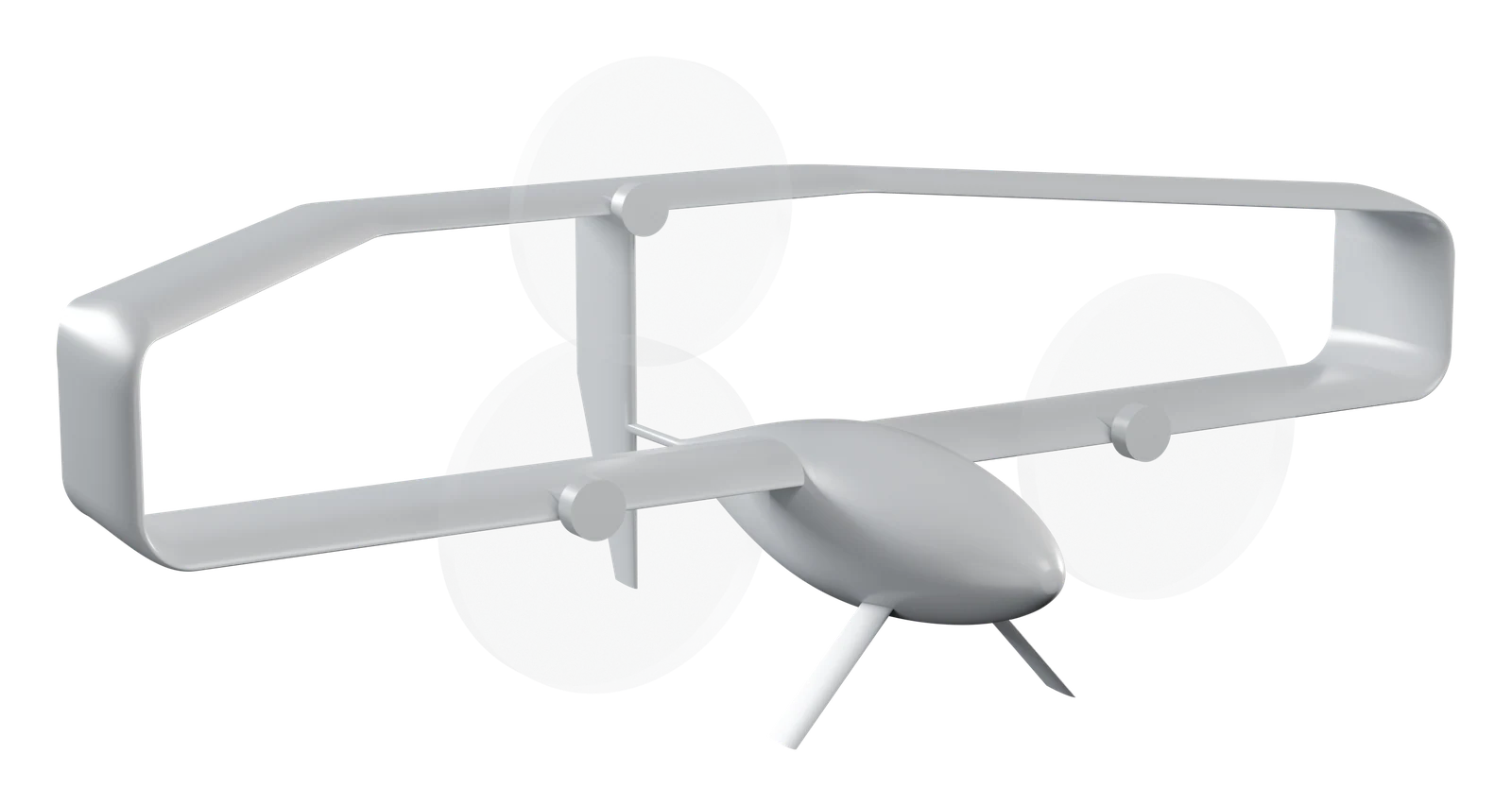
Box wing, three tilting rotors, hybrid power. Designed to stay 22 hours over the same area.
01The problem
A wildfire doesn’t stop when the battery dies. Neither does a flood.
Estimates from our feasibility study.
02The aircraft
Three rotors to climb. A box wing to stay up.
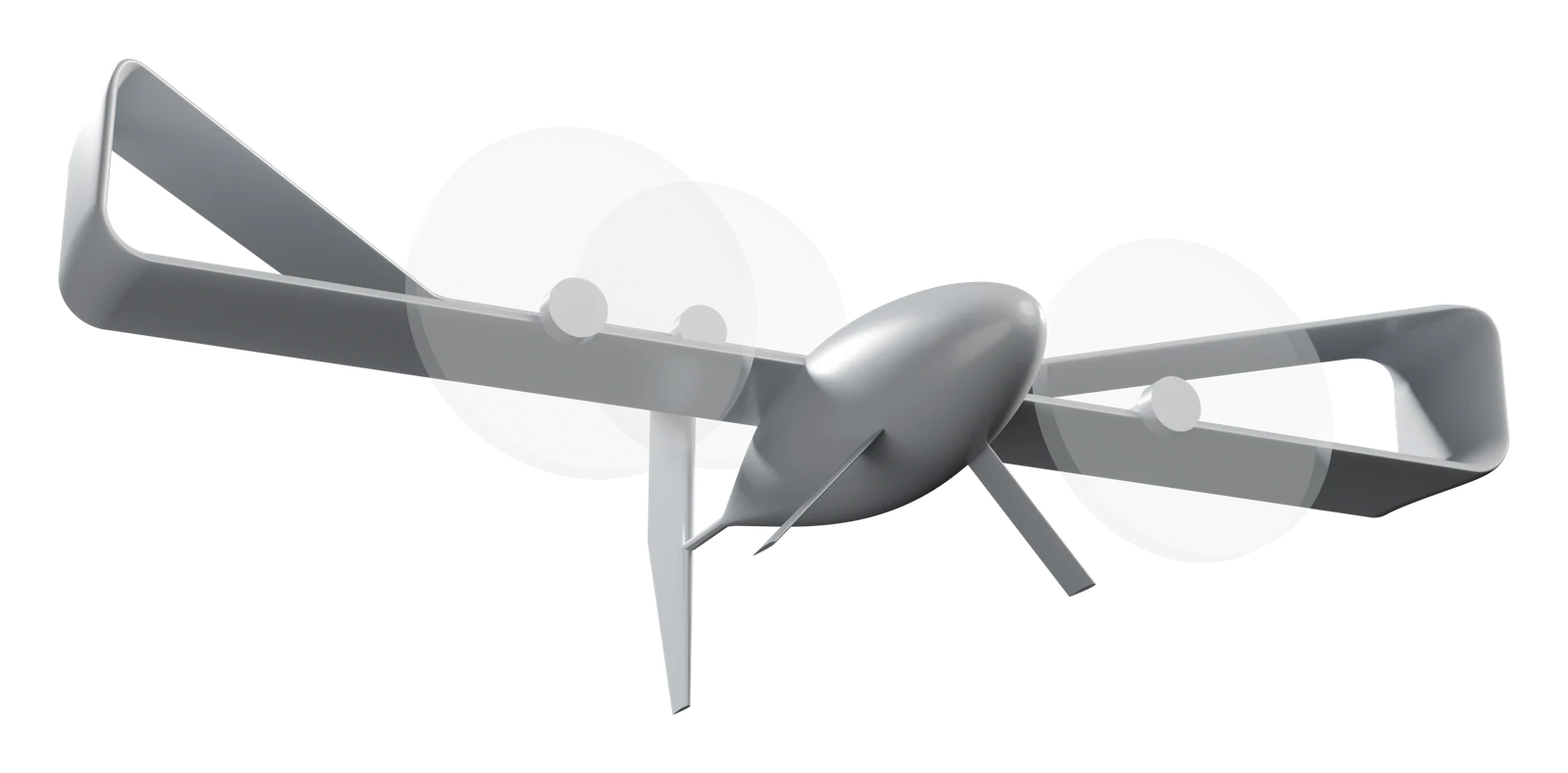
On takeoff the rotors push upward, then tilt forward and the wing takes the weight. No runway, no catapult.
For the same span, a box wing has the lowest induced drag. Ludwig Prandtl worked it out in 1918. Prandtl, NACA TN 182
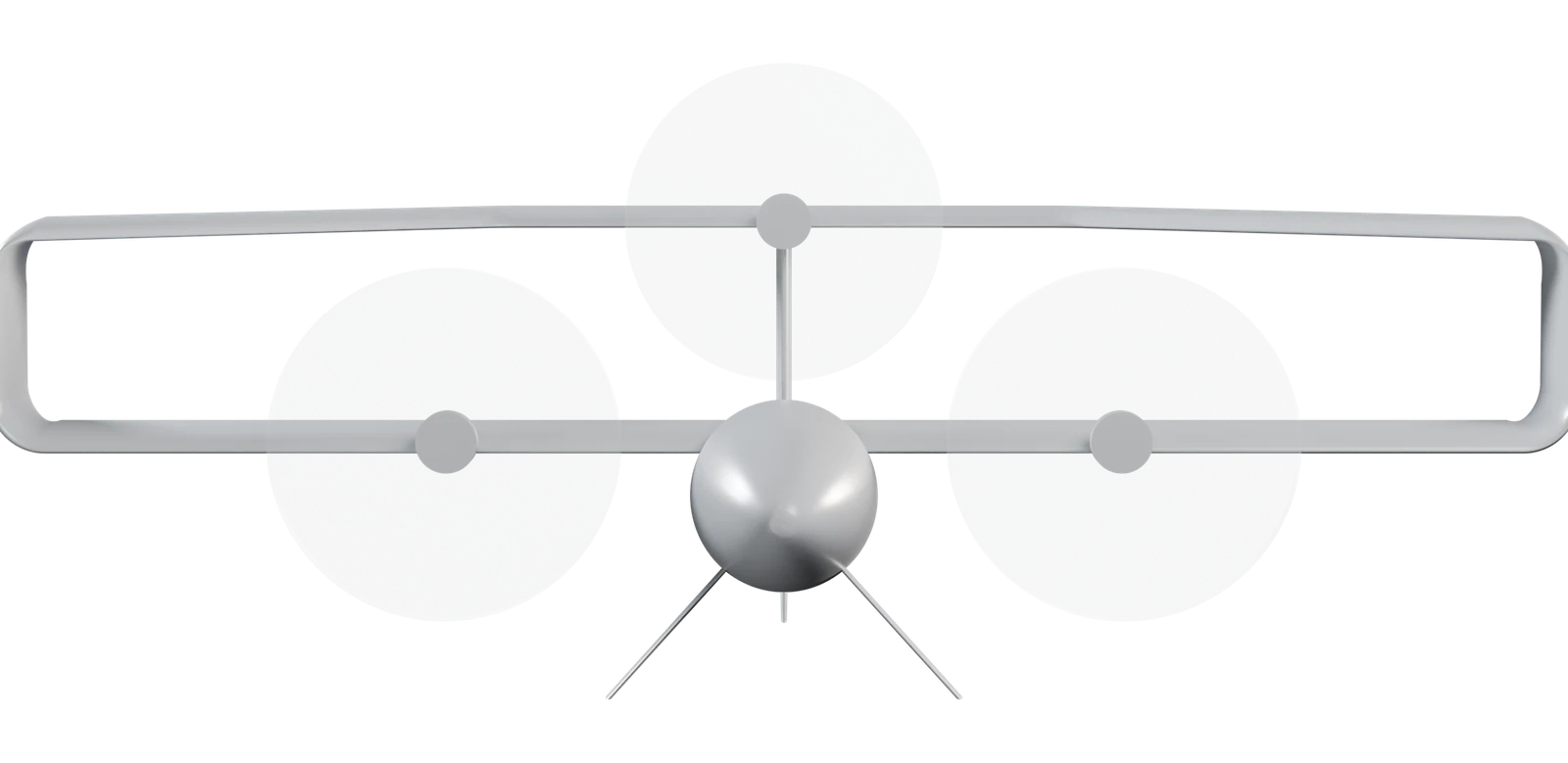
- mass
- 25kg
- span
- 3m
- tilting rotors
- 3
- calculated endurance, hybrid
- 22h
03Missions
Same aircraft, different eyes.
- 01
Optical
Maps and surveys repeated in the same shift, under the same light.
- 02
Thermal
Hot spots and people at night, all night long.
- 03
LiDAR
The ground under the trees, where a photo can’t see.
- 04
Radio relay
Communications where the network is down, or never existed.
04The data
The data stays in Europe.
Processing on board, storage in Italy or the EU. No link to foreign satellite constellations that someone else can switch off or read.
European satellite bandwidth costs more. But we film slopes, coastlines and infrastructure.
05The model
You don’t buy the aircraft. You buy hours over the area.
We run the flights. You choose the area, the hours and what needs to be seen, and you get the data.
We also sell engineering hours to fit Boxy to a mission.
06Why now
Over a million hectares burned. In a single year.
In 2025, wildfires burned 1,079,538 hectares in the European Union: the highest figure since EFFIS records began in 2006, nearly double the average. In August, 22 very large fires broke out almost at once in Spain and Portugal.
07Where we are
Next milestone: first flight.
- Done
Endurance calculated, three-tilting-rotor configuration.
- Now
Hybrid powertrain on the test bench.
- Next
Prototype first flight.
- Then
First flight hours for customers.
08Where we come from
Before Boxy, there was Panissa.
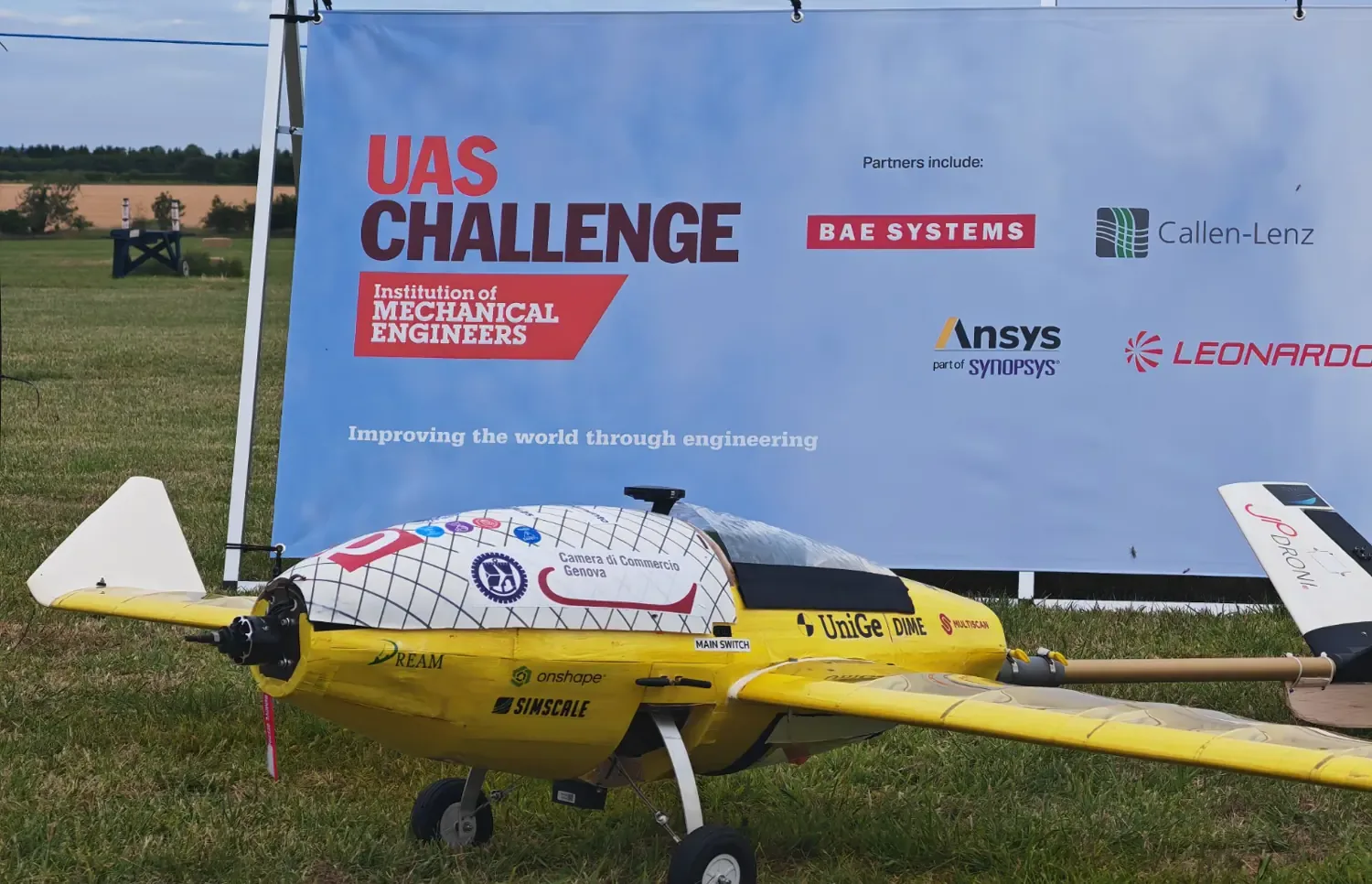
With DOPE Hubs, the University of Genoa team, we designed and built Panissa: fixed wing, V-tail. At the IMechE UAS Challenge 2026 it placed fourth out of 54 teams.
Panissa, DOPE Hubs, UAS Challenge 2026
09Team
The people building Boxy.

Sebastiano Raggi
Project lead. Fluid dynamics and aeroacoustics.
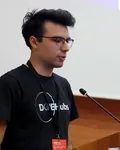
Edoardo Maestri
Hybrid powertrain and energy.

Luca Bricarello
Robotics and flight autonomy.

Luigi Thea
Electronics and regulations.
Boxy is incubated by Firmamento Technologies, which signs the contracts.
10Contact
Bring us a mission. We’ll tell you if it flies.
The area, how many hours, what you need to see. Sebastiano Raggi, who leads the project, will reply.